A website can have attractive design and useful content, but Google may still struggle to understand it when pages are poorly organized. An SEO-friendly structure creates a clear route from the homepage to service, category and article pages. This improves crawling, user navigation and the relevance of every page.
Why website structure matters for SEO
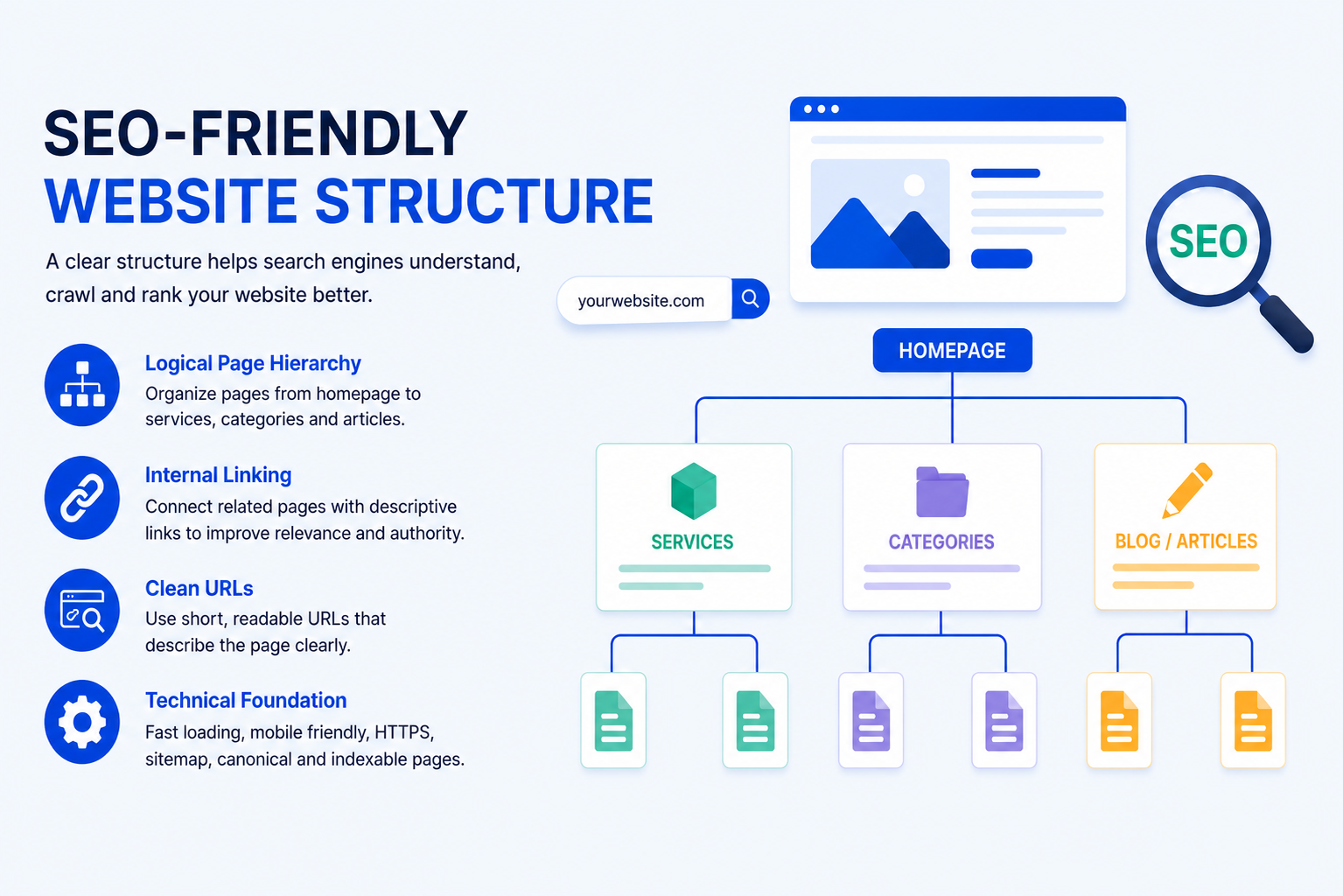
Search engines follow links to discover pages and use headings, URLs and page relationships to understand their purpose. A logical structure makes important content easier to reach and prevents useful pages from becoming isolated.
Key benefits of an SEO-friendly structure
Good structure supports both users and search engines. Visitors can understand where they are, while Google can connect related topics and identify the most important pages on your website.
- Better crawling: Internal links help Google discover important pages without unnecessary depth.
- Clear relevance: Each page targets one useful topic with a unique title, heading and URL.
- Improved experience: Simple navigation helps visitors reach services and information quickly.
- Stronger authority: Related articles and service pages support each other through meaningful internal links.
Important website structure elements
Logical Page Hierarchy
Organize the website from homepage to main services, supporting topics and detailed articles.
Clean URLs
Use short, readable URLs that describe the page and keep one consistent canonical version.
Internal Linking
Connect related services and articles using descriptive links that help users and search engines.
Technical Foundation
Maintain fast loading, mobile responsiveness, HTTPS, sitemap, canonical tags and indexable pages.
How structure supports better ranking
A clear hierarchy helps search engines understand which pages are central to your business and which pages provide supporting information. Strong service pages can be supported by relevant blog articles, FAQs and case studies.
Website structure alone does not guarantee first-page ranking, but it removes technical confusion and gives high-quality content a stronger foundation for search visibility.
How DigiX Technologies can help
DigiX Technologies designs SEO-ready websites with clean navigation, responsive layouts, optimized page hierarchy, internal linking, technical metadata, sitemap integration and conversion-focused service pages.
Planning an SEO-friendly website?
Start with clear services, unique pages, descriptive URLs, useful internal links and content written for real customer questions. Keep every important page reachable through normal navigation.
View SEO Service